
Records Behind an Altamonte Springs Resident Lookup
Altamonte Springs records are divided among city, Seminole County, and Florida custodians. Choose the record by the question it can answer. Property records establish ownership, voter data confirms registration facts, dockets document a case role, vital records document an event, and state profiles show a public business or professional affiliation. Their limits matter as much as their fields.
| Record | What it can confirm | Official source | Access and limits |
|---|---|---|---|
| Property roll | Owner, mailing and situs relationship, exemptions, sale trail | Seminole County Property Appraiser | Free; an owner is not necessarily an occupant |
| Voter record | Adult registration, residence, status, party, participation | Seminole Supervisor of Elections and Florida Division of Elections | Self-check or public extract; protected fields and voters excluded |
| Court docket | Name variants, party role, case events, disposition | Seminole Clerk, Eighteenth Judicial Circuit | Public index; sealed, juvenile, adoption, and confidential material withheld |
| Official records | Recorded parties, deeds, liens, mortgages, probate links | Seminole Clerk Official Records | Public index and images; certification follows clerk rules |
| Vital records | Birth, death, marriage, or divorce event and family links | Florida DOH, DOH-Seminole, or Seminole Clerk | Eligibility depends on event, age, and certificate content |
| Business and licenses | Entity role, registered agent, credential, public status | Sunbiz, DBPR, and DOH MQA | Free profiles; listed addresses may be stale or commercial |
Begin with the most specific source tied to what is already known. Rank a dated primary record above an undated compilation, and preserve the source date so a later reader can judge whether the evidence is current.
Build a Two-Record Altamonte Springs Resident Match
The same-name trap is common in court, property, and business indexes. A sound resident lookup corroborates at least two independent attributes, such as a middle initial, spouse or relative, associated address, approximate date, legal description, entity, or license. Search initials, married and maiden names, compound surnames, spacing variants, and forms that may have lost accent marks in an older index.
- Anchor the name to a dated property, voter, deed, license, or business record and record its exact spelling.
- Search an independent index using the full name, then repeat with reasonable variants and a narrow date range.
- Compare at least two details that are not merely copied from the first source.
- Open the image or full profile when available, since the index can omit qualifiers or role labels.
- Ask the custodian for an archived file or certified copy only when the research purpose requires it.
A property owner name plus a matching mailing address can support identity, but it does not list renters or all household members. Homestead status supports owner occupancy for that tax year, not a complete household.
Inspect a Court Docket During an Altamonte Springs Resident Lookup
Altamonte Springs has no separate municipal court database. State cases run through Seminole County in Florida's Eighteenth Judicial Circuit, with the clerk as custodian. The county court handles county-level matters, while circuit court covers felony, larger civil, family, probate, and other circuit jurisdiction. Federal matters are searched separately through PACER for the Middle District of Florida, principally the Orlando Division.
| Portal control | Use in a name search | Caution |
|---|---|---|
| Search Type | Select party/name, case number, or another available inquiry mode | Terms acceptance or CAPTCHA may appear |
| Last Name / Business Name | Try exact and variant forms | A common surname needs more narrowing |
| First Name / Middle Name | Reduce same-name results | Initials and omitted middle names can hide matches |
| Case Number | Open a known case directly | Florida numbers encode year, division, and sequence |
| Date From / Date To | Limit by filing date | Filing date is not necessarily the event date |
| Court / Case Type | Limit the circuit or county division | Access differs across criminal, civil, family, and probate |
The result can show a case number, division, type, filing date, party names and roles, attorneys, events, document numbers, hearings, judge, status, and disposition when public and populated.
The official FDLE Florida Checks page explains the separate statewide name-based criminal-history channel.
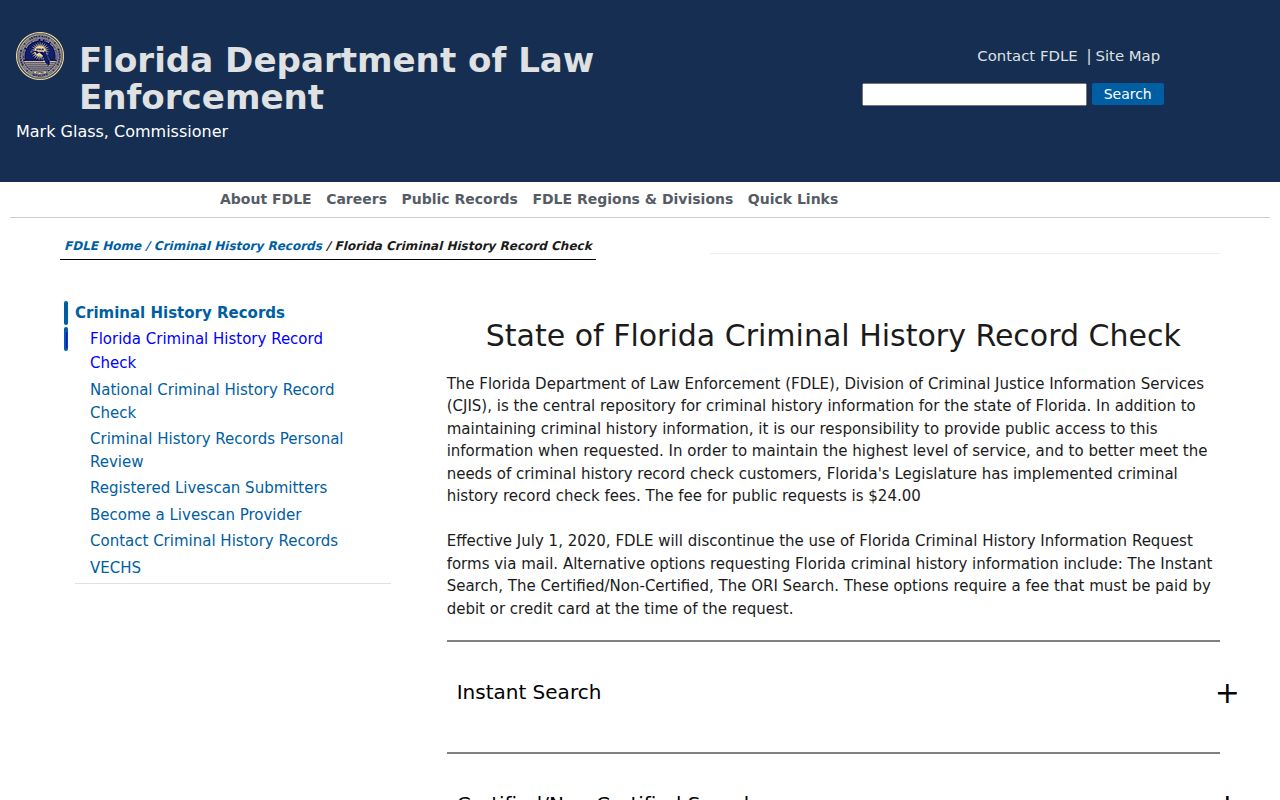
A court docket, statewide history search, jail booking, and conviction record are different products. Arrests are not convictions, and dispositions may lag.
Read Altamonte Springs Resident Lookup Results Correctly
Public portals often show a short index first and make the filed image, paper file, or authenticated copy a separate step. Knowing that distinction prevents an index hit from being quoted as if every underlying fact had been reviewed.
- Docket
- The chronological court case record listing parties, filings, hearings, and other events that are open to public access.
- Index versus image
- An index is the searchable summary; an image is the scanned filed document, which may contain fuller context or redactions.
- Certified copy
- A copy authenticated by the official custodian for a purpose that requires proof of the record's official status.
An uncertified copy is usually enough for personal research. Archived files or documents not yet imaged may require a clerk file pull and copying charge. Clerks explain access and copies but cannot provide legal advice or declare that two same-name records belong to one person.
Confirm Voter and Vital Clues for an Altamonte Springs Resident
Florida's voter-status check is built for a voter to inspect their own registration, not for browsing people by street. It requires first name, last name, and birth date. A match can confirm status and party, while county services add precinct, polling place, sample ballot, and vote-by-mail details. Participation history states which election was recorded, never how anyone voted. A nonmatch can result from a recent update, a spelling mismatch, or the wrong county.
For permitted public analysis, the Division of Elections extract includes active and inactive voters through its published production cycle. Public fields can include name, residence and mailing address, county, precinct, districts, party, status, registration date, and participation history. Social Security, driver-license or state-ID numbers, application source, and signature copying are protected. Data for preregistered 16- and 17-year-olds is confidential.
Vital evidence has a different access pattern. Birth certificates less than 125 years old are restricted. Death certifications without cause are public, while cause of death remains restricted for 50 years to eligible applicants. Marriage and divorce certifications are generally public, although the clerk holds the actual local license or case. Use the current certificate-specific form because fees and options change.
Family Paths Through an Altamonte Springs Resident Lookup
A resident lookup can support family and reunion research when the source and consent rules guide the work. For an heir trail, start with a probate docket and recorded death or deed documents. Test relatives through an obituary, vital record, census, or directory, then distinguish a named personal representative from an heir. Do not assume every person in a probate file has the same role.
A birth-parent inquiry belongs in Florida's official Adoption Reunion Registry and its consent process. Adoption files remain confidential, so trying to work around sealed records is not a valid shortcut. A former classmate trail can begin with yearbooks, directories, and library reference service, then use public current evidence without publishing a private address.
Historical evidence is especially useful when a modern name has changed. The 1913 and 1917-18 regional directories, census schedules, newspaper databases, cemetery material, and UCF RICHES can supply family or place clues. The Altamonte Springs city directory guide explains the verified volumes and how their entry styles differ.
Test Business and License Clues in an Altamonte Springs Resident Lookup
Sunbiz searches Florida corporations, limited-liability companies, partnerships, and fictitious names. An individual officer or registered-agent query commonly uses LAST, FIRST, MI and can accept partial text. Results lead to an entity detail page with document number, status, principal and mailing addresses, registered agent, officers or managers, annual reports, and filing images.
Those fields prove a reported organizational role, not a home address. A registered agent can be a service company, and an officer address can be old or commercial. Compare the filing date, annual-report year, role, and another independent record before linking it to a resident.
DBPR offers Name, License Number, City or County, and License Type modes. Results may show a licensee or business, profession, address, number, status, expiration, and public complaint or discipline material. Health practitioners use the separate DOH MQA portal. The official DBPR license search displays the state search interface.
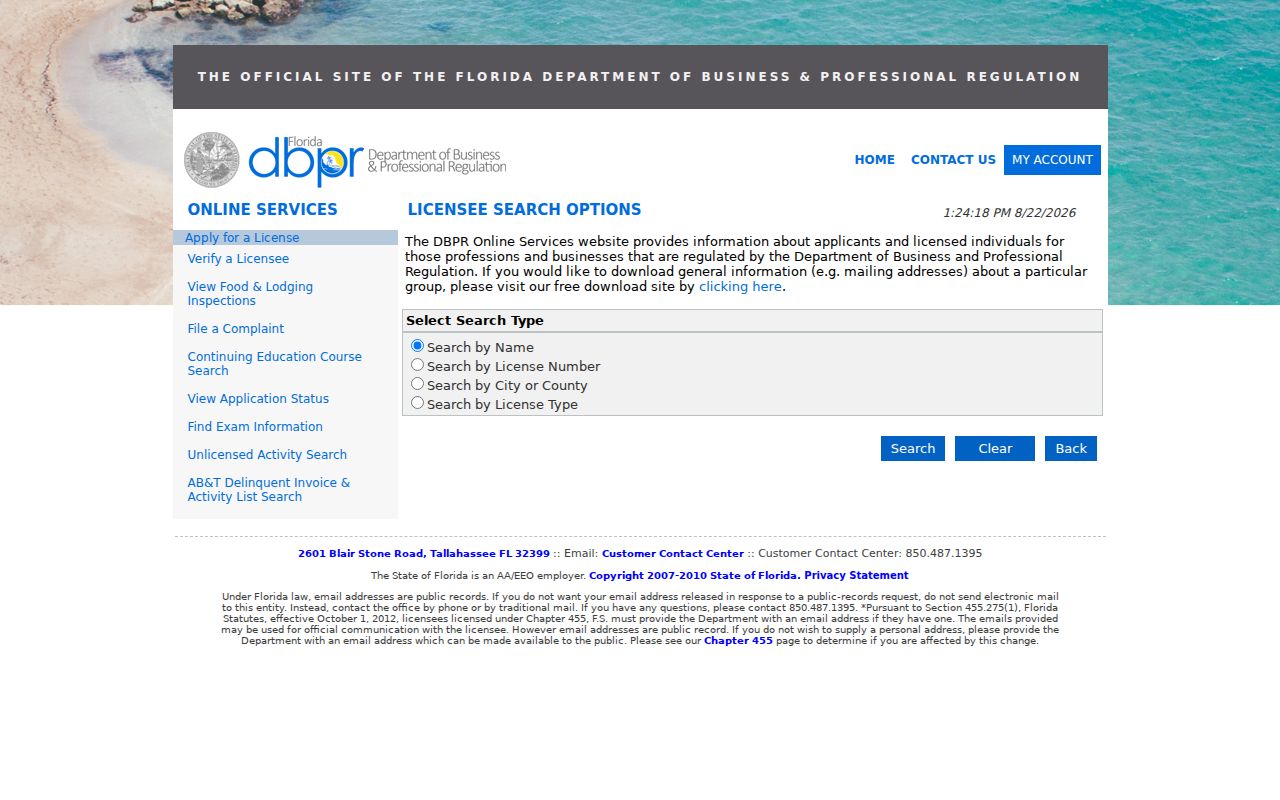
Read “active,” expiration, location, and license type together. A matching name without a matching profession or date is still only a lead.
When an Altamonte Springs Resident Lookup Reaches the Web's Edge
An online gap does not mean the record does not exist. Send a narrow request to the office that created or keeps it. The Altamonte Springs City Clerk handles city correspondence, agendas, permits, liens, code matters, business-tax receipts, and city police-record routing. Requests may be sent through the web form, CityClerk@altamonte.org, 407-571-8122, fax 407-571-8123, or mail and in person at 202 Newburyport Avenue.
Florida law does not require a city requester to identify themself or complete the form, though contact details help with routing and clarification. Identify the department, existing record type, name or address, case or permit number, and date range. Ask for electronic copies and an estimate. Extensive clerical or technology work may produce a special-service charge; the city's published schedule lists research for a written staff response at $40 per hour with a one-hour minimum.
Corrections also go to the source: the Property Appraiser for roll facts, Supervisor of Elections for voter data, clerk or court process for docket issues, and the licensing board for a profile. A free Seminole Property Fraud Alert can email a person or company when a new name-indexed instrument is recorded, but it detects a filing rather than preventing one.
Privacy Limits for an Altamonte Springs Resident Lookup
Florida's broad access tradition does not open every detail. Juvenile, adoption, sealed or expunged cases, protected victim data, confidential family-law papers, recent birth records, cause-of-death information, motor-vehicle data, and specified identifiers can be restricted. The Attorney General's Address Confidentiality Program gives qualifying survivors of domestic violence or stalking a substitute mailing address. Florida law also provides address exemptions for specified high-risk professions and classes.
Lawful use. Use an Altamonte Springs resident lookup only for lawful personal research, and never to stalk, threaten, harass, or expose a protected person.
Commercial compilations can merge same-name people, lag moves or deaths, and repeat stale data. An official record can also be outdated or incomplete. Verify with the custodian, honor access restrictions, and do not infer a current residence from a protected or missing address.