
Altamonte Springs Previous Resident Sources
No single roll covers all eras or all occupants. The best source changes as the trail moves from a modern parcel into early Seminole County and then across the 1913 county line. This era table separates ownership evidence from household evidence.
| Source | Known span | Keeper | Address evidence |
|---|---|---|---|
| Official Records and deed books | Seminole era; modern online extent not firmly stated | Seminole Clerk and Records Center | Grantor, grantee, instrument, legal description, mortgages and releases |
| Altamonte locality directory | 1913 | UCF STARS; OCLS source | Names and sparse household phrases, often without a street |
| R. L. Polk Sanford directory | 1917-18 | UCF STARS; Sanford Museum source | Alphabetical, street, and business entries |
| Regional directory microfilm | 1978, 1979, 1988 | Gale series; reading site must be confirmed | Later address and household snapshots |
| Federal census | Decennial schedules through 1950 public in 2026 | NARA and library databases | Household members, ages, relations, birthplace, and recorded address |
| Permits, newspapers, probate | Coverage varies | City, county library, and clerk | Work dates, family links, estate events, and property disposition |
For a recent house, start with the parcel and deed. For an early family, use directory and census evidence, then close gaps with newspapers, probate, church records, or cemetery material. Ownership is never automatic proof of occupancy.
Give each finding a source date and label it as owner, occupant, applicant, relative, or correspondent. That keeps the timeline honest when the same person appears in more than one role.
Start Altamonte Springs Address History
The Seminole County Property Appraiser gives the stable facts needed for previous-resident research: parcel ID, situs address, owner spelling, mailing address, legal description, subdivision, lot and block, sale reference, and homestead status. Situs means the physical property location. Mailing means where the owner receives correspondence.
Copy the legal description before following any name. A modern number may postdate a subdivision or road change, but lot, block, plat, and parcel references can preserve the land identity. Altamonte Springs incorporated in 1920 and grew from an early rail and hotel settlement into a dense suburb, so modern-address continuity should not be assumed.
Note: No authoritative citywide renumbering year or verified Altamonte Sanborn sheet was found, so neither should be invented.
Trace Seminole Previous Owners Backward
The Seminole Clerk Official Records inquiry links a current parcel to earlier owners. Start with the sale instrument on the assessment card. Confirm both the party and legal description before moving to the next deed.
- Record the current owner, parcel ID, legal description, and sale instrument from the property card.
- Open that instrument and confirm the current owner as grantee, the party receiving the property.
- Take the grantor, the party transferring the property, and search that name as an earlier grantee.
- Repeat while comparing the same legal description at each link.
- If an older image is absent, contact the Clerk Records Center or Official Records staff for the book and page.
- Grantor and grantee
- The grantor gives or sells an interest; the grantee receives it.
- Chain of title
- The linked sequence of transfers for the same land.
- Legal description
- The formal land identity, often based on a plat, lot, block, or survey rather than a street number.
Group Altamonte Springs Deed Searches
The Official Records results grid supports column sorting, Starts With, Ends With, Contains, and Equals filters, grouping, a column chooser, and export to Excel, PDF, or XML. The Append to Existing Results control is especially useful for previous residents. Add each successive owner search to one working set instead of losing the earlier links.
A clerk historical presentation documented an online starting point of January 19, 1962 while older records were being added. The current clerk says all Official Records should now be online. Treat 1962 as a historical benchmark, not a guaranteed cutoff. Email officialrecords@seminoleclerk.org or use the Records Center when a known old book is missing.
Note: Search personal names in the clerk's indexed order and test initials, spelling variants, and entity names.
Previous Residents Before Seminole County
Seminole County was split from Orange County on April 25, 1913. That event creates a real archival handoff for Altamonte Springs previous residents. A land, court, or local record predating the split may be in an Orange County predecessor book even though the parcel is now in Seminole County.
The same change appears on the directory shelf. The 1913 Orange County and Orlando City Directory includes an Altamonte locality list. The 1917-18 R. L. Polk volume is organized around Sanford and Seminole County. The title change is useful evidence, not a catalog error.
The Florida State Archives genealogy collection provides a fallback for census, church, cemetery, military, immigration, Bible, and family-name material.
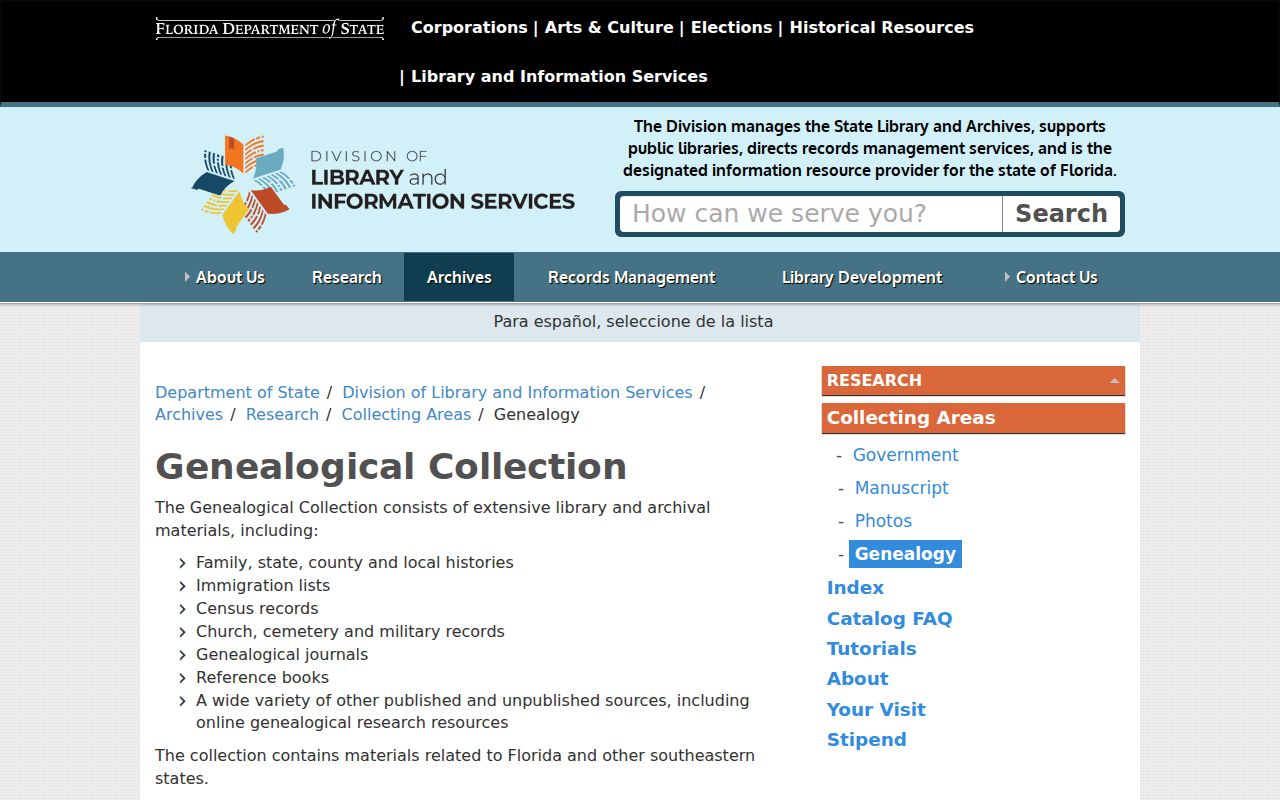
The archive page helps bridge a local address trail when county and city indexes stop.
Altamonte Springs Past Household Evidence
Owners are only half of an address history. Directories and census schedules can place household members and renters between transfers. The 1913 Altamonte list is alphabetical and often lacks street addresses. The 1917-18 Polk volume is stronger for address work because its street section begins at page 23 and alphabetical names at page 43.
- Search the closest directory year for a surname, initials, and household wording.
- Take the address or approximate place into the nearest public census schedule.
- Compare household names, ages, relationships, birthplace, and the enumerated location.
- Move to the next directory, then use a newspaper, obituary, or probate case to explain a departure or death.
The full collection history belongs on the Altamonte Springs city directory page. Here, each volume serves only as one dated point in the backward address trail.
Lawful use. Research previous residents for house history, genealogy, and personal curiosity. Florida law does not permit stalking, harassment, or threats against a living person.
Date Altamonte Springs House Changes
City permits can date a new structure, addition, renovation, demolition, roof, pool, dock, fence, or major system work. They may show an applicant, contractor, work address, scope, value, dates, status, and inspections. The applicant may not have lived there, so a permit supports the building timeline rather than proving a household.
Altamonte Police records are a separate municipal request channel, illustrated by the official police records page.
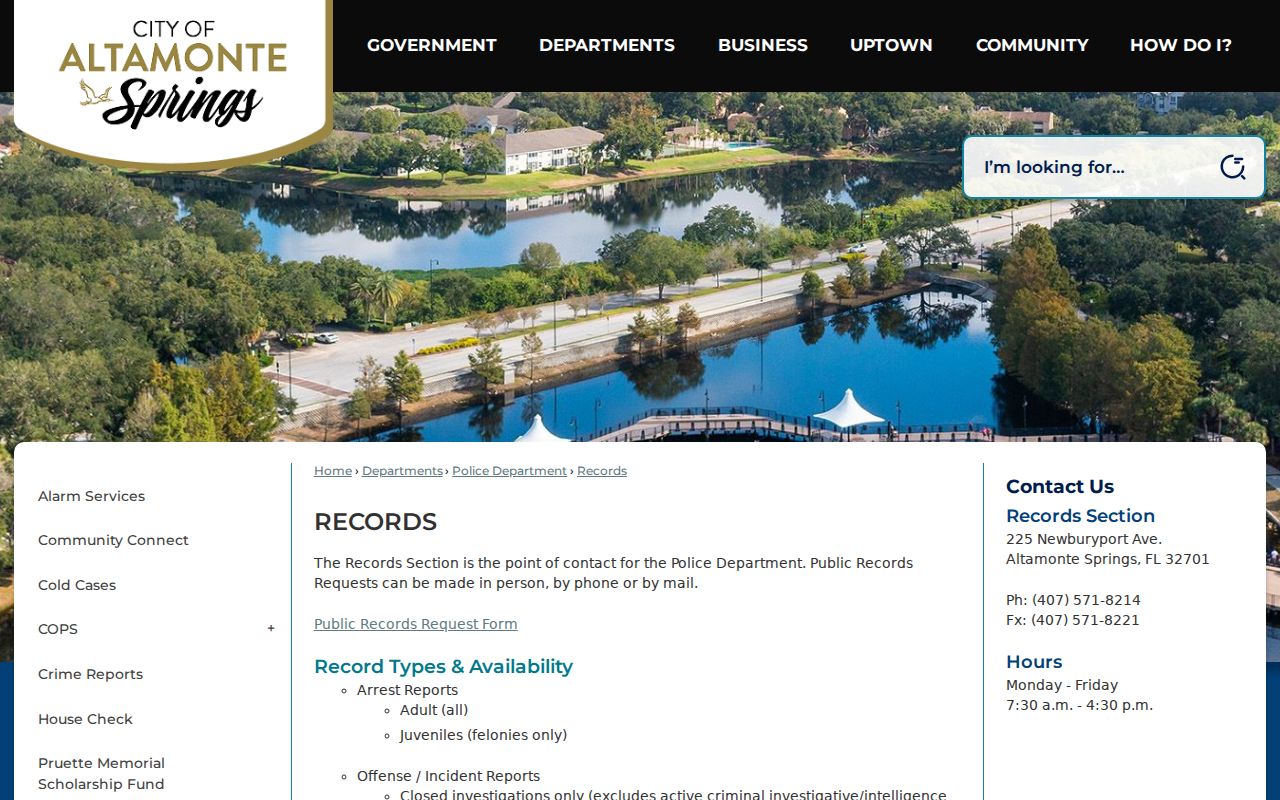
Use a precise address, record type, and date range when requesting an existing city file.
Probate and obituaries often close the trail. A probate docket can name a decedent, estate representative, heirs, creditors, and property disposition, subject to redaction. HeritageHub and GenealogyBank through the county library can supply death notices and family links. Exact Altamonte newspaper runs were not verified, so ask reference staff before assuming coverage.
Altamonte Springs Previous Resident Archives
The FamilySearch Florida wills and deeds collection has a statewide title spanning roughly the 1700s through 2017, although county and image completeness varies. Some images require sign-in or affiliate-library access.
It is a secondary access path, while the clerk remains the authority for Seminole recorded instruments.
Federal litigation may add an estate or ownership clue through PACER, which requires an account and can charge for pages.
A federal case is supporting evidence only. Match names, dates, relatives, and the property before adding it to the address timeline.